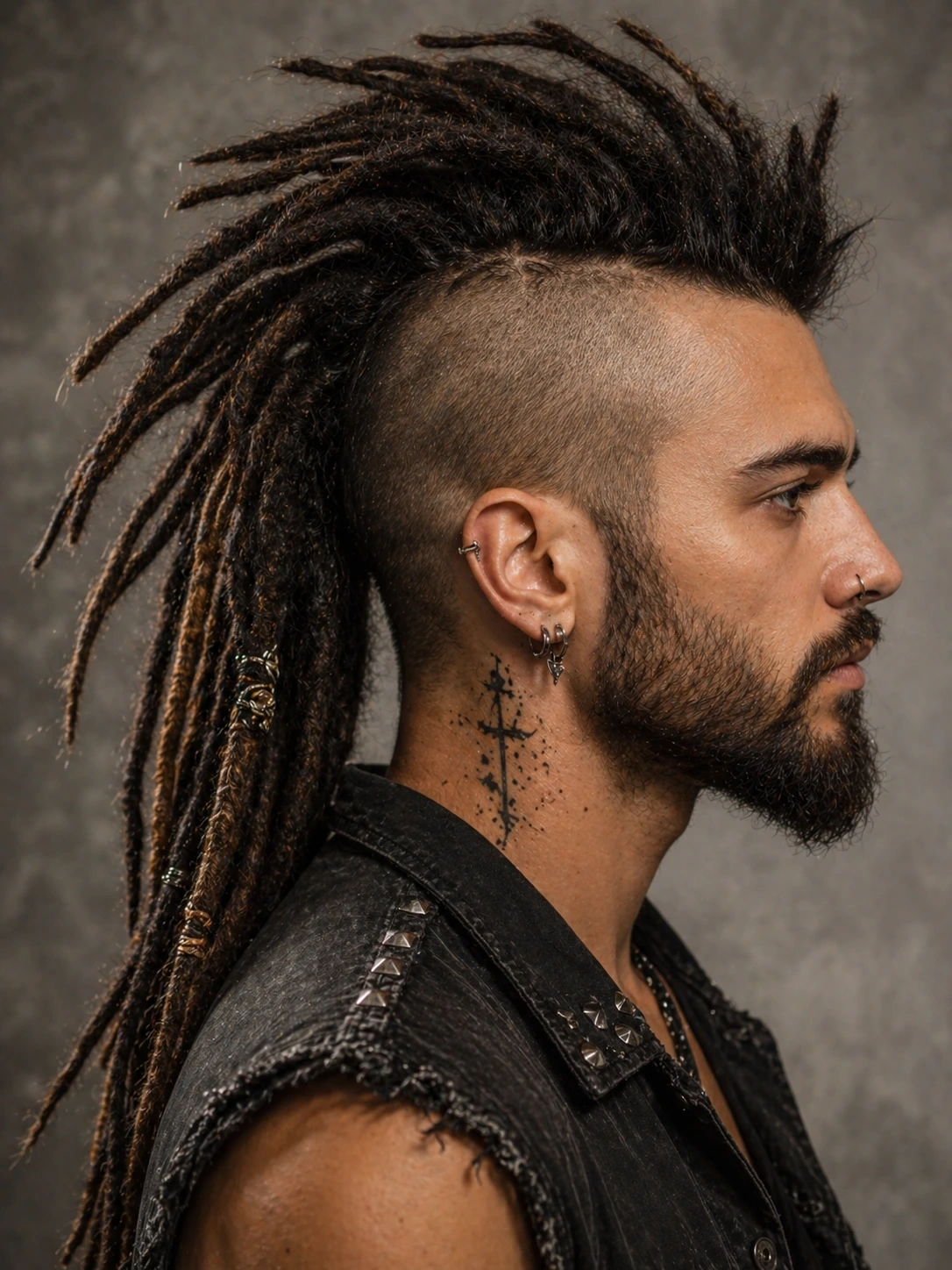
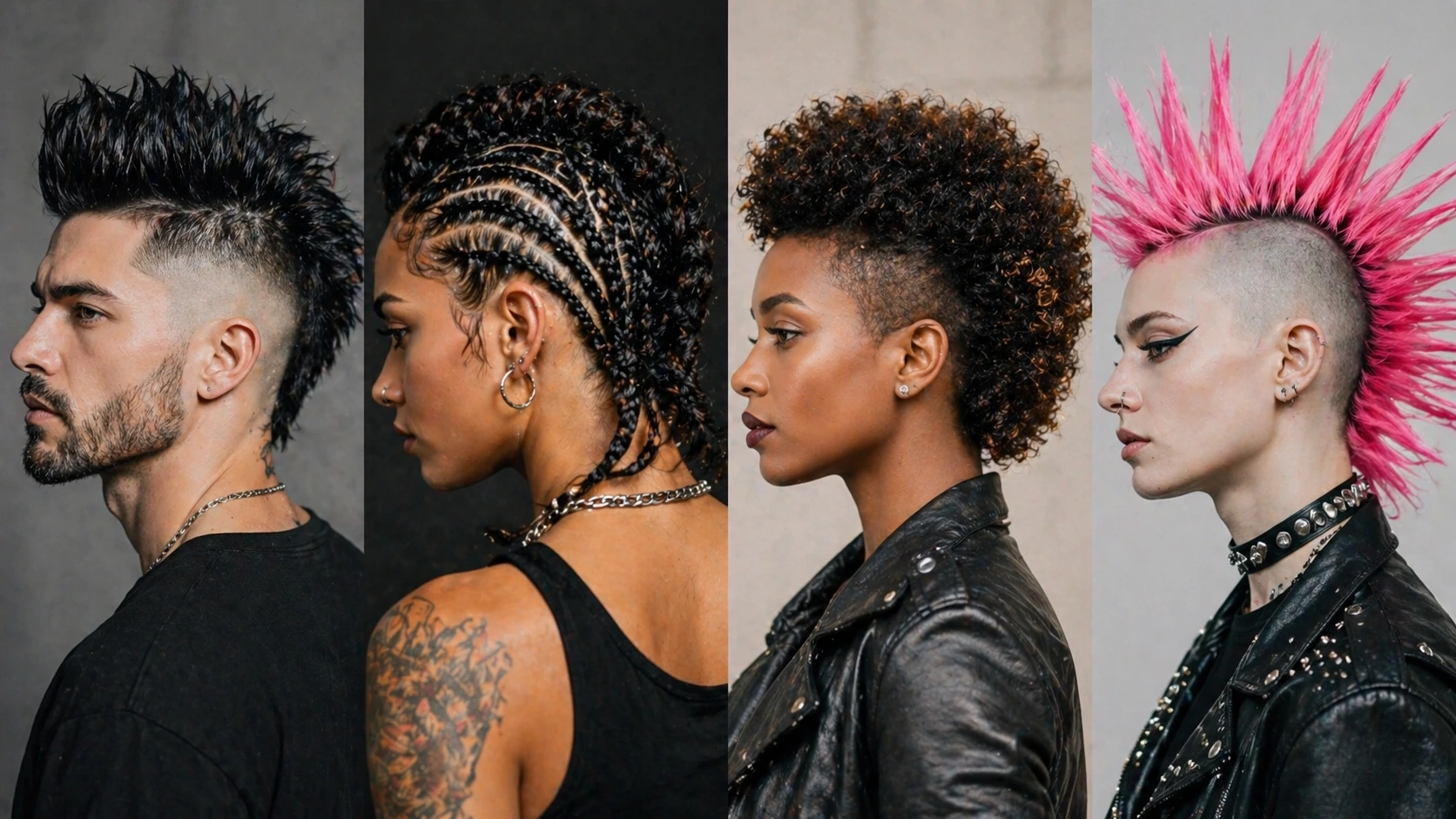
What Is a Mohawk Hairstyle?

A mohawk hairstyle is defined by a strip of hair running from the forehead to the nape of the neck, with the sides of the head either shaved, closely cropped, or styled to appear shorter than the central ridge. The central strip can be worn flat, spiked, braided, twisted, or left natural depending on the variation.

The name comes from the Mohawk Nation (Kanien'kehá:ka), one of the six nations of the Haudenosaunee — also known as the Iroquois Confederacy — who traditionally wore a distinctive roach hairstyle. However, the modern mohawk as a cultural symbol is most closely associated with punk subculture of the 1970s and 1980s, where it became a statement of nonconformity. Joe Strummer of The Clash and Mr. T are among the most iconic figures who brought the mohawk into mainstream consciousness.

Today the mohawk is no longer a fringe style. It has evolved into dozens of variations that span gender, hair texture, age, and aesthetic — from the clean faded mohawk favored by men at the barbershop, to the intricate braided mohawk worn as protective styling on natural hair, to the curly mohawk embraced by women with 4c texture. Athletes like Neymar Jr and LaMelo Ball, and artists like Rihanna, have brought it repeatedly into the mainstream spotlight.

The defining characteristic — contrast between the central strip and the sides — remains constant across all variations. Everything else: length, texture, color, technique, and formality, is up to interpretation.
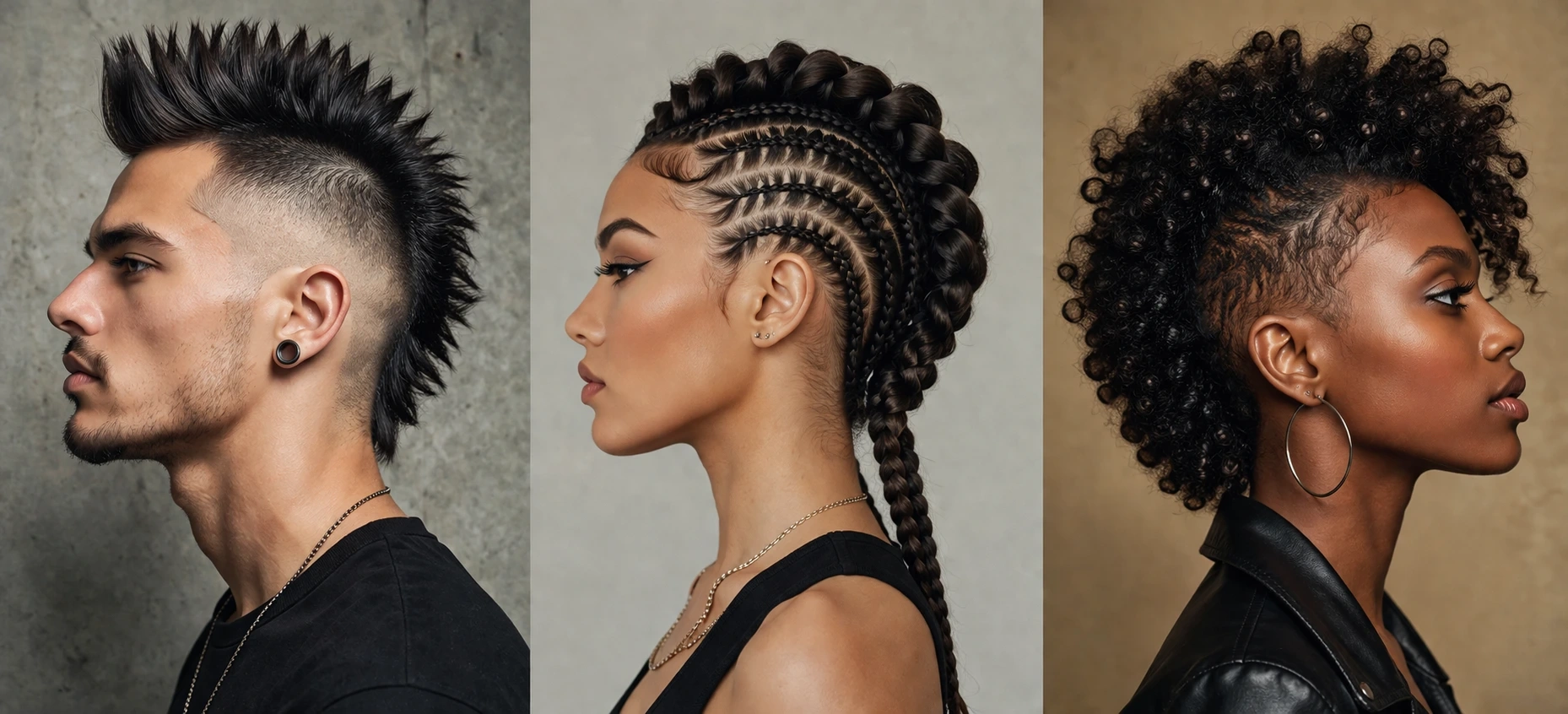
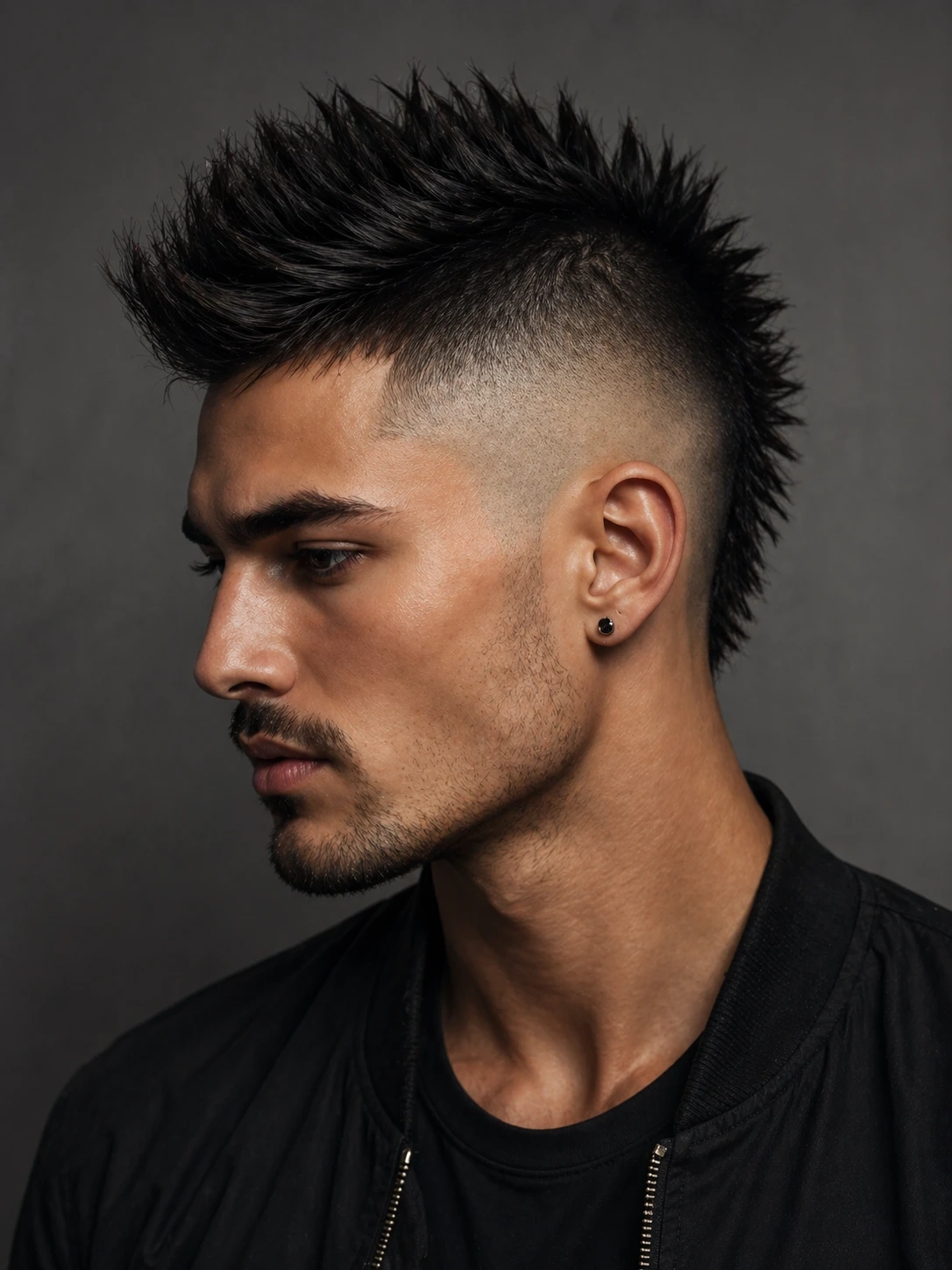
A Brief History of the Mohawk Cut

  • Pre-colonial era — The Mohawk Nation wore a distinctive warrior roach, a ridge of hair stiffened with animal fat, as a symbol of strength and identity. The style was not identical to the modern mohawk but shares the same structural logic.
  • 1930s–1940s — WWII paratroopers, particularly soldiers of the 101st Airborne Division before the Normandy landings, shaved their heads into mohawks as a psychological tactic and a sign of unit solidarity. This introduced the cut to Western popular culture.
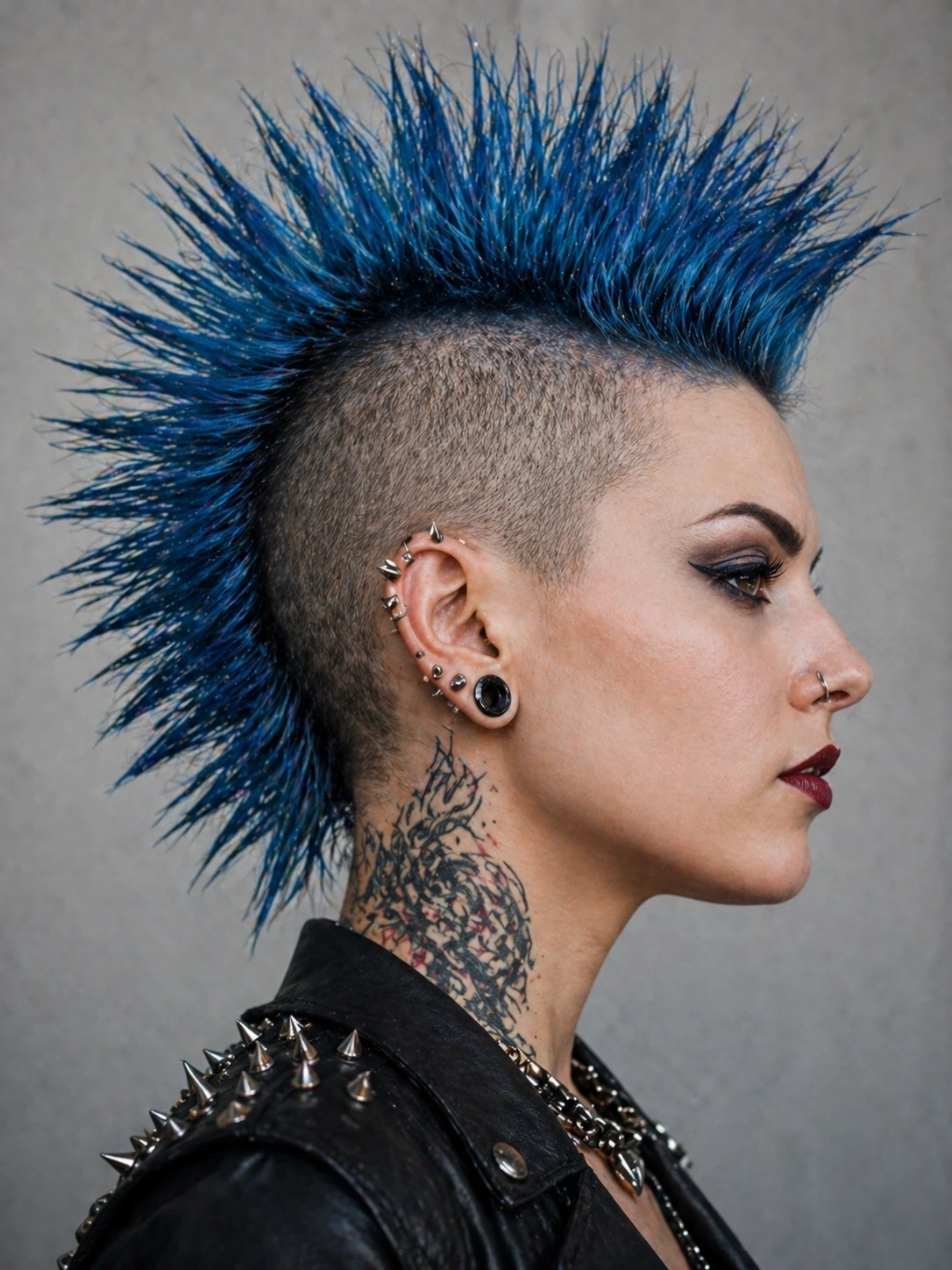
  • 1970s–1980s — Punk subculture in the UK and US adopted the mohawk as its most recognizable symbol. The style was often dyed in vivid colors and spiked with hairspray or egg whites. Joe Strummer, Siouxsie Sioux, and GG Allin cemented its association with rebellion.
  • 1980s–1990sMr. T brought a softer, non-spiked version to mainstream television, making the mohawk familiar to audiences who had never engaged with punk.
  • 2000s–present — The mohawk shed its subcultural exclusivity entirely. Faded and tapered variations became standard barbershop requests. Natural hair communities embraced braided and protective versions. The style is now universal.

Browse Mohawk Styles by Category

men's faded mohawk haircut
Men's

Men's Mohawk Hairstyles

The faded mohawk is the most-searched variation worldwide, with over 74,000 monthly searches. This section covers every male style: faded, tapered, buzz cut, undercut, semi mohawk, viking, punk, and long hair. Includes barbershop guides and styling tutorials.

Explore men's styles
women's braided mohawk natural hair
Women's

Women's Mohawk Hairstyles

Female mohawk styles span curly, pixie, bob, afro, faux hawk, 4c natural hair, and more. This is the largest category on the site with styles for every hair type, length, and occasion — from everyday protective looks to formal updos.

Explore women's styles
crochet mohawk hairstyle tutorial
Techniques

How to Do a Mohawk: Techniques

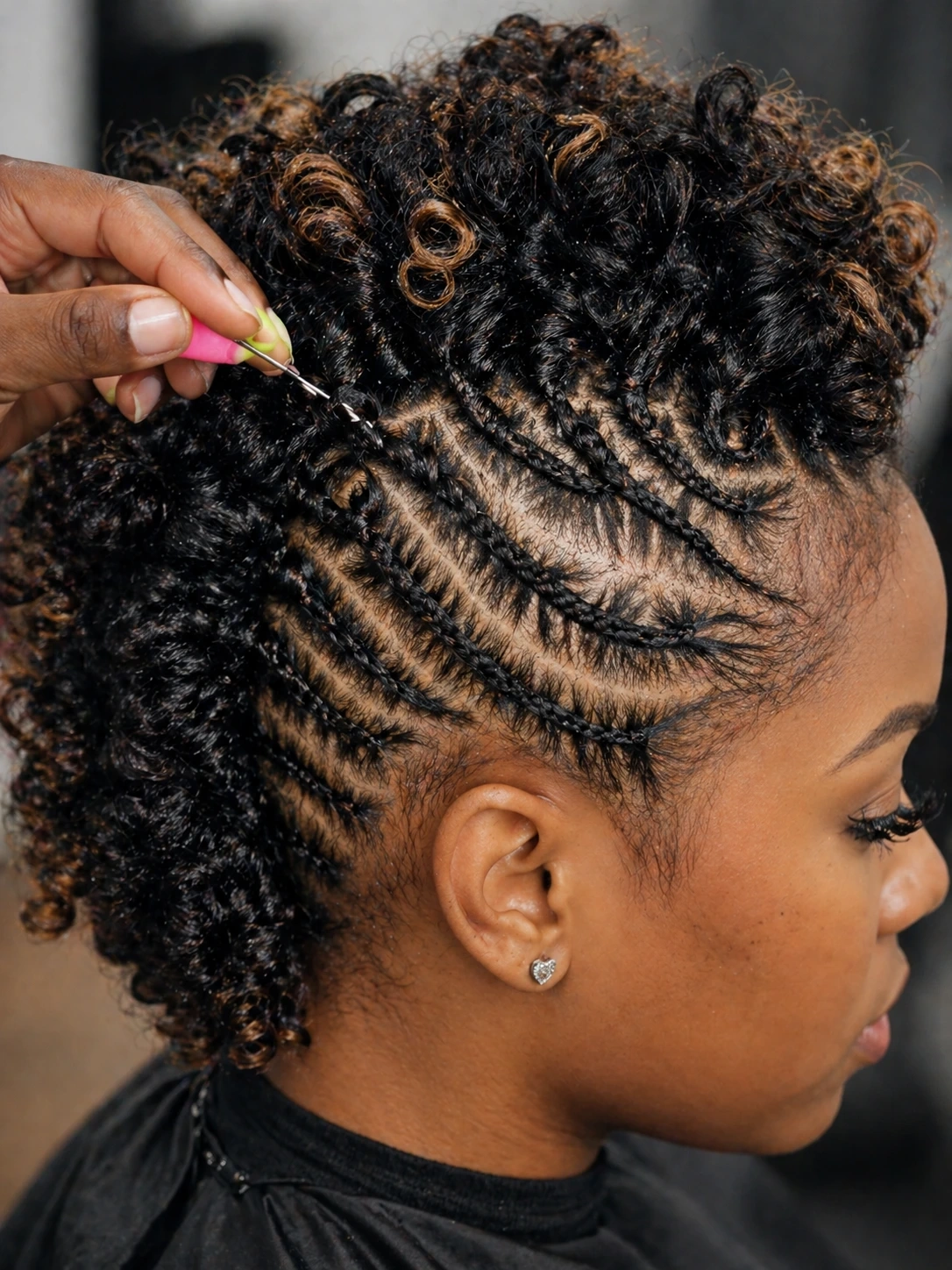
Crochet, quick weave, twist, faux locs, drawstring, and no-shave mohawk methods explained from start to finish. Includes product recommendations, step-by-step breakdowns, and maintenance guides.

Explore techniques
braided mohawk hairstyles cornrows
Braided

Braided Mohawk Hairstyles

The most richly searched subcategory: cornrow mohawk, box braids, french braid, bubble braid, viking braid, knotless braids, and more. Covers protective braided styles for black hair, natural hair, and all textures.

Explore braided styles
colored punk mohawk hairstyle
Subculture

Colored Mohawk & Subculture Styles

Blue, pink, purple, red, blonde, rainbow — every color variation with dye guides. Also covers punk, goth, cyberpunk, and 80s mohawks, plus a deep dive into celebrity mohawk moments from Rihanna to Neymar.

Explore colored styles
mohican hairstyle vs mohawk
Variations

Special Mohawk Types & Variations

Mohican, dreadlock mohawk, pixie mohawk, long mohawk, wavy, messy, back mohawk, sisterlock, tomahawk — niche variations with their own dedicated guides. Also covers the mohawk vs faux hawk debate and Korean mohawk trends.

Explore all variations

Types of Mohawk Hairstyles

There are dozens of distinct mohawk variations, but they all fall into recognizable families. Here is a map of the landscape:

01

Faded Mohawk

The most popular variation globally (74,000+ monthly searches). The sides are shaved or faded — low, mid, high, or skin fade — leaving a clean strip on top. Can be worn flat or styled upward. Best for men with any hair type.

Full guide: Faded Mohawk →
02

Braided Mohawk

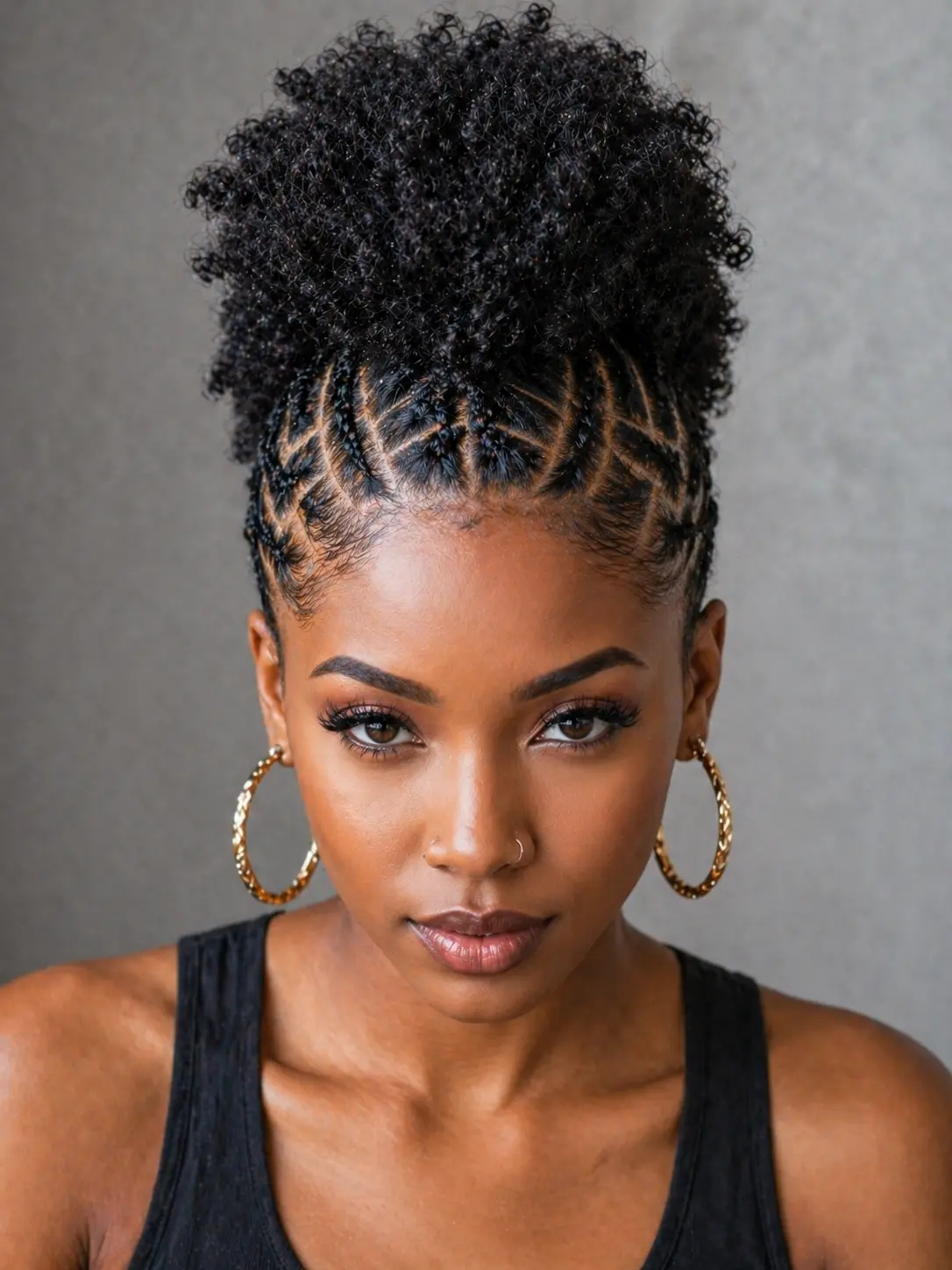
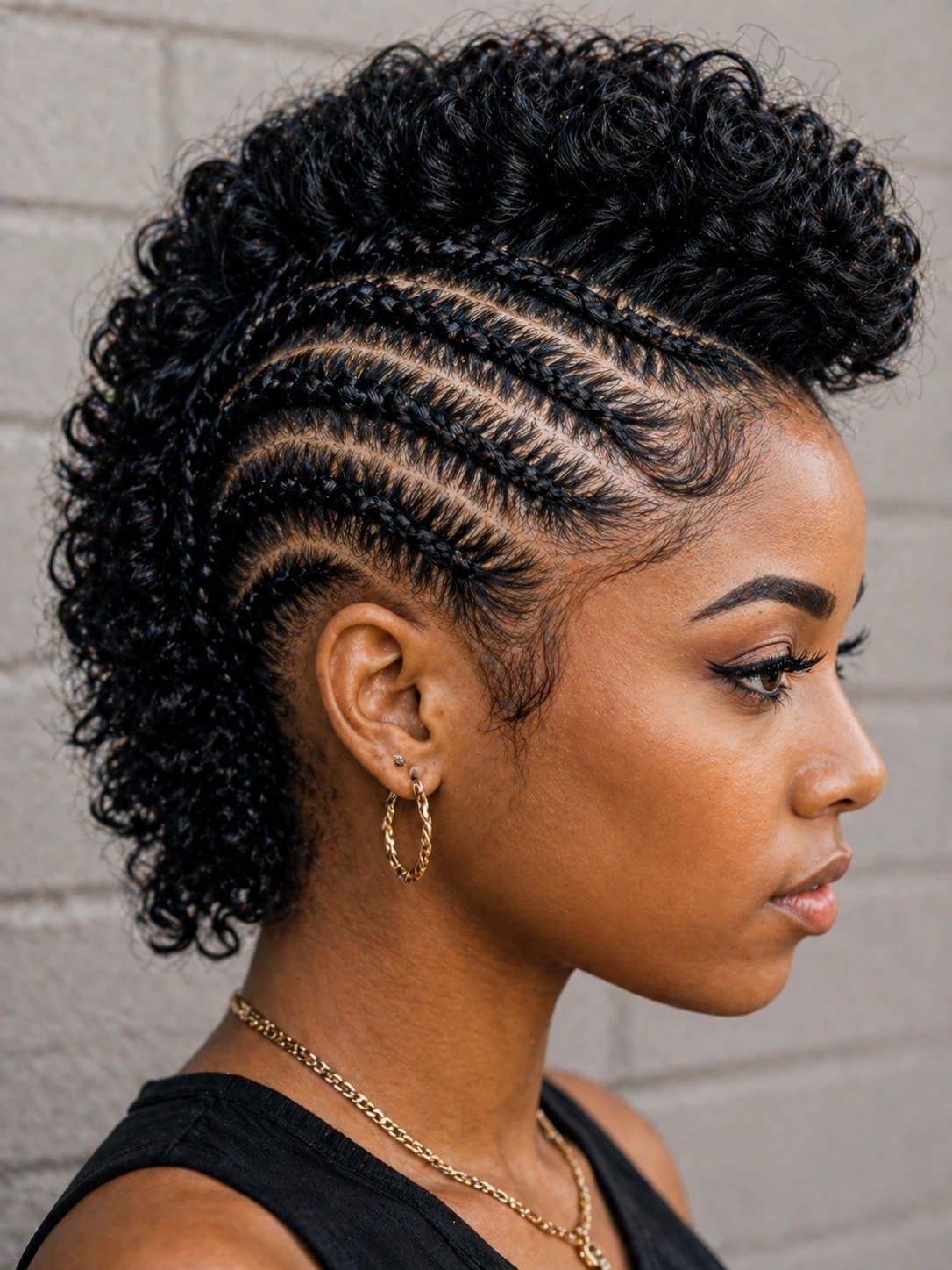
The sides are braided flat (usually cornrows or box braids) while the center strip is left loose, curly, twisted, or styled with crochet extensions. This is the dominant mohawk style in protective hair communities.

Full guide: Braided Mohawk →
03

Curly Mohawk

Natural or enhanced curls run down the central strip, with straight or faded sides. Particularly popular among women with 4a–4c natural hair. The curly mohawk accounts for 8,100+ monthly searches on its own.

Full guide: Curly Mohawk →
04

Punk Mohawk (Spiked)

The original subculture version: the central strip is spiked vertically with strong-hold products, often dyed in vivid colors. Closely associated with 1970s–80s British and American punk.

Full guide: Punk Mohawk →
05

Tapered / Undercut Mohawk

A softer, office-friendly variation where the sides are not fully shaved but closely cut or undercut, creating a gradual transition. Also called a semi mohawk.

Full guide: Tapered Mohawk →
06

Faux Mohawk (No-Shave)

Achieved without scissors: hair from the sides is pinned or tied back to create the illusion of a mohawk ridge. Popular for people who want the look without permanent commitment.

Full guide: Faux Mohawk →
07

Dreadlock Mohawk

Locs are gathered and pinned upward into a central ridge, with sides shaved or braided flat. A significant protective styling option with 5,400+ monthly searches.

Full guide: Dreadlock Mohawk →
08

Pixie Mohawk

A short-cropped style where the mohawk ridge is trimmed very close, combining the pixie cut silhouette with the central-strip structure. Popular among women. 3,600+ monthly searches.

Full guide: Pixie Mohawk →
09

Viking Mohawk

Braided mohawk with Norse or warrior aesthetic, often featuring longer braids along the central ridge. Popularized by media depictions of Scandinavian culture.

Full guide: Viking Mohawk →
10

Mohican

Often used interchangeably with mohawk, but technically refers to a British interpretation of the style where the ridge runs from front to back with fully shaved sides and no spiking. The term generates 22,200+ searches monthly.

Full guide: Mohican Hairstyle →
types of mohawk hairstyles illustrated

Who Is the Mohawk For?

The modern mohawk is genuinely universal — but different variations suit different people. Here is how to navigate the options:

By hair texture:

  • Straight or wavy hair — the faded, tapered, undercut, and buzz cut mohawk work best. Hair holds a spike well with pomade or gel.
  • Curly or coily hair (3a–4c) — the curly mohawk, afro mohawk, and twist mohawk are the most natural fits. The curl pattern creates volume in the central strip without additional effort.
  • Locs or dreads — the dreadlock mohawk and loc mohawk are the primary options, with the petal mohawk as an elegant formal variation.

By gender presentation:

There is no gender boundary in mohawk styling. Male-coded styles tend toward shorter, tighter fades with less length in the ridge. Female-coded styles often retain more length, lean toward braided and protective techniques, and incorporate updos and buns.

By commitment level & face shape:

  • Permanent — requires shaving or fading the sides; the fully committed mohawk.
  • Semi-permanent — the undercut or tapered sides grow out more naturally than a skin fade.
  • No commitment — the faux mohawk achieves the look entirely with styling, no cutting required.

The mohawk adds height to the top of the head, which elongates the face visually. This makes it particularly flattering for round faces. For those with already long or narrow faces, a shorter, flatter ridge is recommended over tall spikes.

Mohawk Hairstyle FAQ

What is the difference between a mohawk and a mohican?

Both terms describe a hairstyle with a central ridge of hair and shorter or shaved sides. In American English, "mohawk" is standard. In British English, "mohican" is more common. The terms are used interchangeably, though some stylists define the mohican as a variation where the ridge is not spiked and the sides are fully shaved. For search purposes, both terms lead to the same category of styles.

Does a mohawk require shaving the sides?

No. While the classic punk mohawk involves shaving or closely clipper-cutting the sides, several modern variations avoid any cutting. The faux mohawk is created entirely by pinning or tying the side hair back. Braided mohawks achieve the look by braiding the sides flat against the scalp. The key is contrast, not necessarily a razor.

What hair products do you need for a mohawk?

For spiked mohawks on straight hair, a strong-hold gel or pomade is essential — got2b Glued is the most widely recommended product in the style community. For natural hair mohawks, edge control, moisturizing cream, and holding spray are more appropriate. Braided styles require braiding gel and, if using extensions, the specific crochet or weave hair selected.

Can women wear a mohawk?

Yes, and in terms of search volume, female mohawk queries (8,100+ monthly searches for "female mohawk haircut" alone) rival or exceed male queries for many variations. Women's mohawk styles tend to incorporate more braiding, protective techniques, and length in the central strip. The pixie mohawk, curly mohawk, and braided mohawk are among the most popular female variations.

How long does it take to grow out a mohawk?

This depends on the variation. A fully shaved skin fade mohawk requires a barber visit every 2–4 weeks to maintain the contrast. When growing it out, the sides will take 3–6 months to reach a length that blends naturally with the ridge. Faux mohawk and braided styles that do not involve cutting grow out immediately with no awkward phase.

Is the mohawk a cultural appropriation?

This is a nuanced conversation. The modern mohawk as practiced in barbershops, protective styling communities, and fashion is widely considered a distinct style evolution separate from the original Mohawk Nation warrior roach. Wearing a mohawk does not in itself constitute appropriation. However, wearing it while falsely claiming Native American heritage, or in direct imitation of a ceremonial context, would be disrespectful. The most authoritative guidance comes from Mohawk Nation community voices themselves.

About This Guide

This site covers the mohawk hairstyle in its entirety — from history and cultural context to step-by-step technique guides, photo galleries, and category-specific style libraries. The content is organized so that whether you are a first-time visitor with a simple question ("what is a mohawk?") or a stylist looking for specific technique breakdowns, you reach the right guide in two clicks or fewer.

Content is organized into six main categories: Men's Mohawk Styles, Women's Mohawk Styles, Mohawk Techniques, Braided Mohawk Styles, Colored & Subculture Styles, and Special Types & Variations.

If you are looking for a specific style and do not see it in the navigation, use the search bar or browse the complete style gallery.