
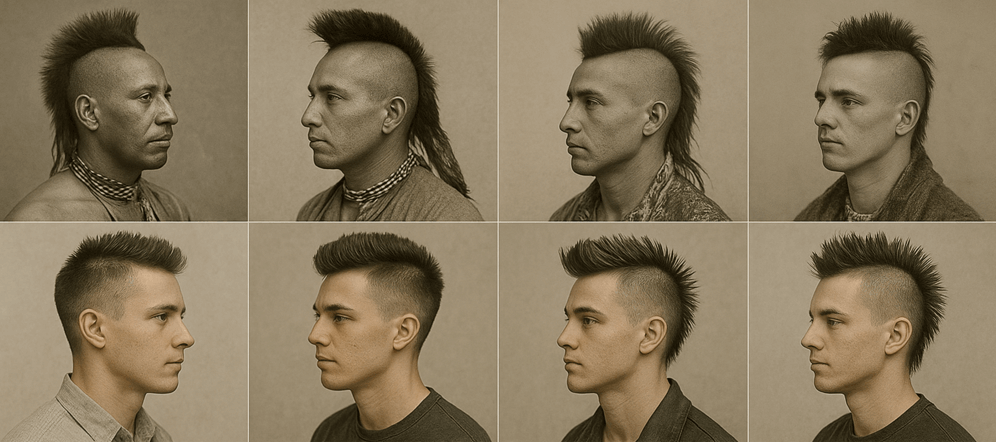
The Mohawk haircut tells a story that spans continents and centuries. What most people call a “Mohawk” today actually comes from a case of mistaken identity that Hollywood made permanent.
The Name That Stuck
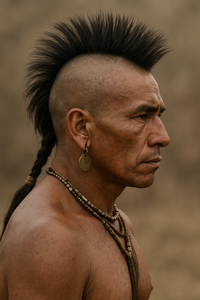
Here’s the first twist: the Mohawk tribe didn’t wear mohawks. The Kanien’kehá:ka people (what outsiders called “Mohawk”) traditionally wore a scalp lock – they’d pluck out most of their hair, leaving just a small section on the crown that they’d braid and decorate. Young warriors wore this style as a mark of their role protecting the tribe.
The hairstyle we know as a mohawk – shaved sides with a strip of hair from forehead to nape – was actually worn by the Pawnee people who lived thousands of miles away in what’s now Nebraska and Kansas. They’d create this distinctive roach hairstyle for ceremonies and battle.
So how did the mix-up happen? Blame Hollywood. The 1939 film “Drums Along the Mohawk” dressed up Native American actors in Pawnee-style haircuts while telling a story set in Mohawk territory. The name stuck, and nobody bothered to correct it.
Ancient Roots
The mohawk-style haircut shows up all over the world, long before anyone in North America met anyone from Europe. In the 5th century BC, Herodotus wrote that the Macai tribe in northern Libya wore this hairstyle.
In Ireland, the 2,300-year-old Clonycavan Man was found preserved in a bog with what looks like an ancient mohawk. Celtic warriors wore similar styles during the Middle Ages.
Ukrainian Cossacks in the 16th century shaved their heads leaving a long central strip, which they braided into a topknot. They called it an oseledets or chupryna. For them, it wasn’t just fashion – it marked them as warriors.
Even Mr. T, who made the mohawk famous in the 1980s, pointed out that the Mandinka warriors of Mali in Africa wore their hair this way.
World War II and the Warrior Connection
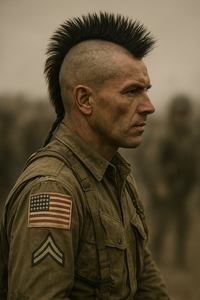
American paratroopers brought the mohawk back during World War II. Soldiers from the 17th Airborne Division and 101st Airborne Division wore mohawks to intimidate their enemies. On D-Day, some paratroopers shaved their heads into mohawks before jumping into France. The style showed up again during the Vietnam War.
The military connection made sense. Throughout history, the mohawk marked warriors. It said you were ready to fight.
From Jazz to Punk
In the 1950s, jazz musicians started wearing mohawks. Sonny Rollins, Dizzy Gillespie, and Cab Calloway made it part of their stage presence. They weren’t trying to look tough – they were creating a new kind of cool.
Then came the punks in the 1970s. They took the mohawk and made it something else entirely. Punk rockers in London and New York shaved the sides clean, spiked up the center strip, and dyed it colors that nature never intended. For them, the mohawk meant rebellion against everything – parents, society, the government, good taste.
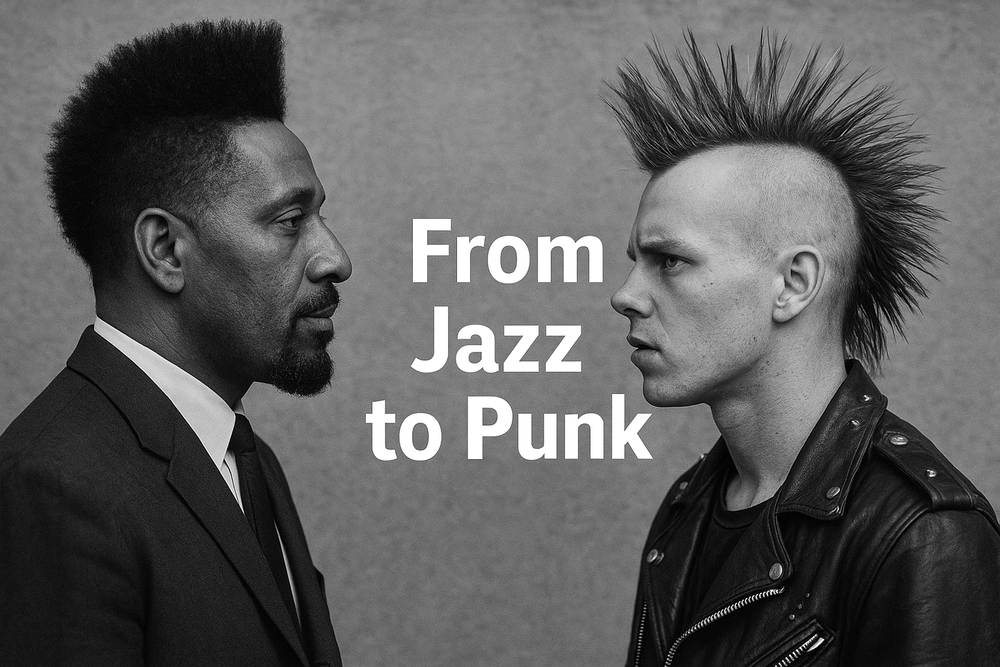
The punk mohawk wasn’t about honoring Native American culture or military tradition. It was about shocking people. And it worked.
Modern Variations
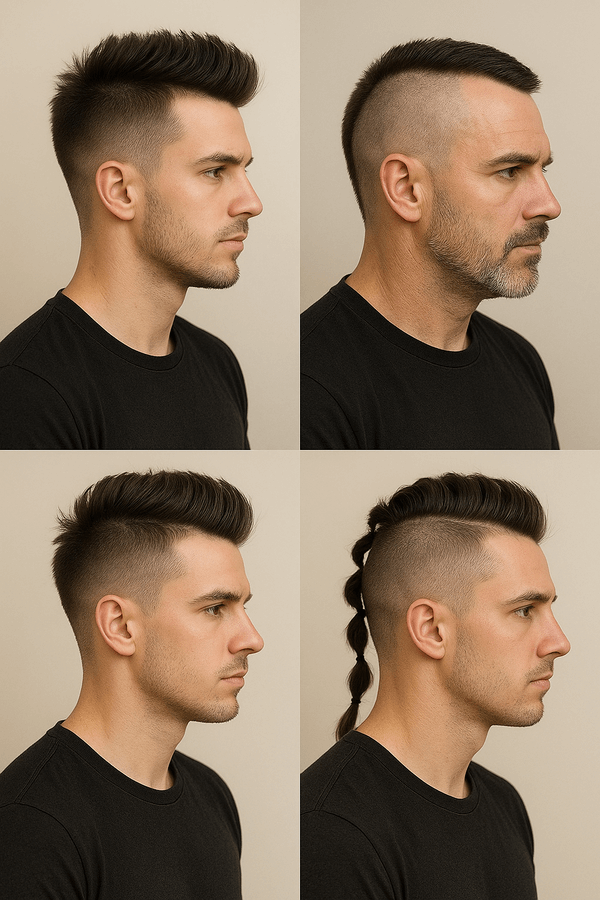
Today’s mohawk comes in dozens of versions:
The fauxhawk keeps hair on the sides but styles it to create the mohawk shape. David Beckham made this mainstream in the 2000s.
The reverse mohawk (or nohawk) shaves a strip down the middle and leaves hair on the sides. Road Warrior Hawk from professional wrestling popularized this in the 1980s.
The euro-hawk features longer hair in the center that can be combed down to look like a regular haircut when needed.
The ponyhawk creates the effect with a row of small ponytails down the center of the head.
The Cultural Question
Native American activists and elders have been clear: wearing a traditional mohawk-style haircut when you’re not Indigenous is disrespectful. The style worn by young warrior men of the Kanien’kehá:ka people has deep cultural meaning related to protection and sacrifice.
This creates a complex situation. The hairstyle exists in multiple cultures independently. Ukrainian Cossacks, Celtic warriors, and African tribes all developed similar styles for their own reasons. But in North America, the association with Native American culture is so strong that wearing one means engaging with that history, whether you intend to or not.
Why It Endures
The mohawk keeps coming back because it makes a statement. You can’t accidentally end up with a mohawk. It requires commitment – you have to maintain it, style it, live with the reactions it gets.
Different groups have used it to say different things. Warriors used it to intimidate enemies. Jazz musicians used it to stand out on stage. Punks used it to reject conformity. Parents today give their kids mohawks because they think it looks cute.
The world record holder, Joseph Grisamore, has a mohawk that stands 3 feet 6.5 inches tall. That’s not about tradition or rebellion. That’s about seeing how far you can push something.
The Bottom Line
The mohawk’s history is messier than most people realize. It’s a Native American name for a hairstyle that Native Americans didn’t traditionally wear, made famous by Hollywood’s inability to get its facts straight, adopted by everyone from ancient Celts to modern punks.
What started as a warrior’s mark became a musician’s flair, then a rebel’s flag, and now shows up on toddlers at the grocery store. Each generation takes the mohawk and makes it mean something new.
The only constant is that it gets attention. After thousands of years, across dozens of cultures, the mohawk still makes people look twice. That’s quite an achievement for a haircut.